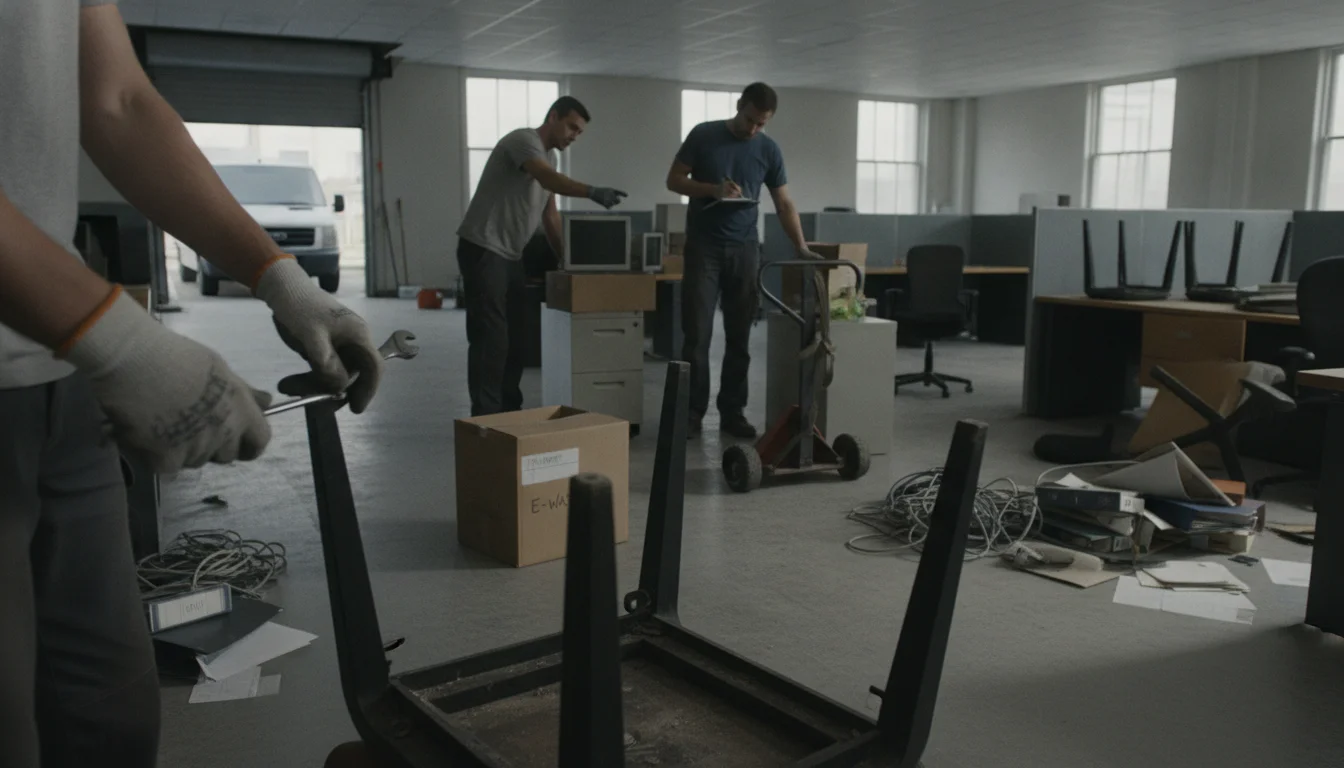
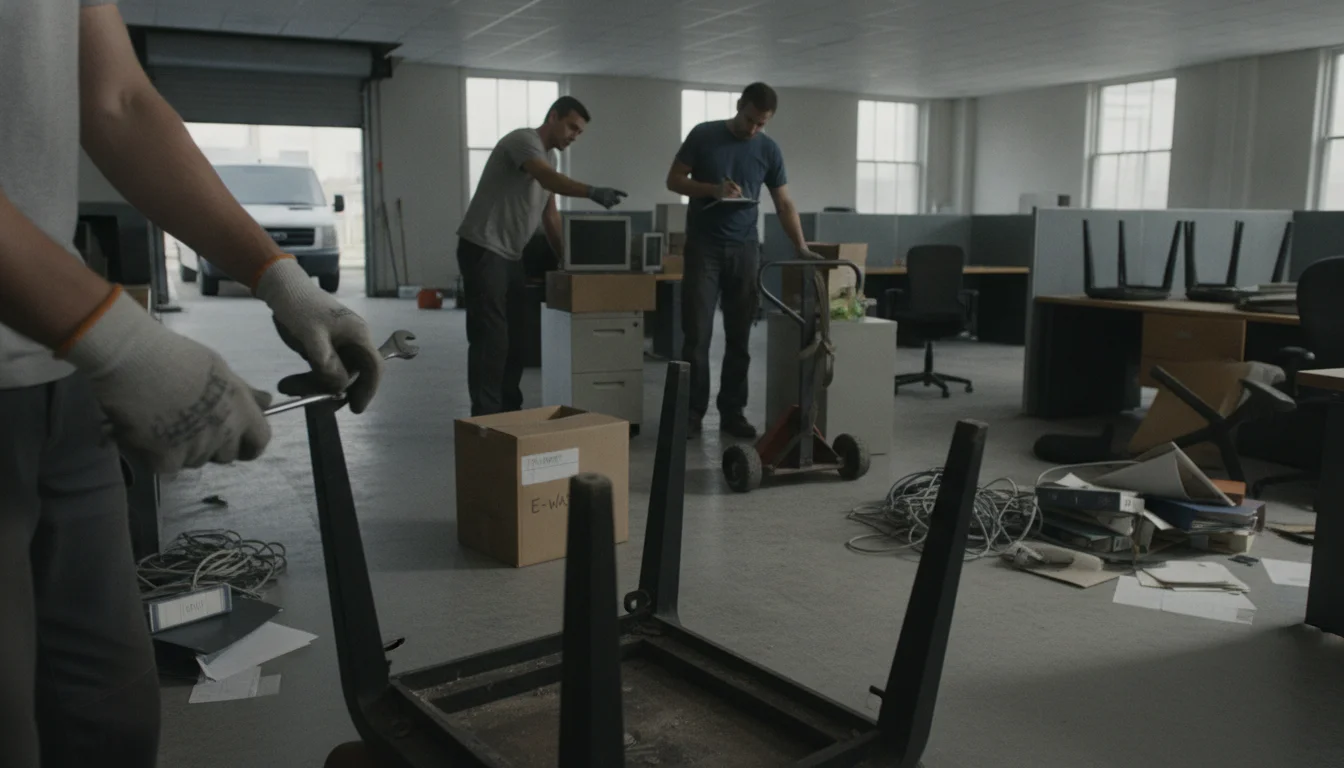
Office furniture removal vs dumpster rental comes down to labor, space, timing, and waste type. Professional removal handles lifting and hauling for desks, cubicles, and tables. A dumpster may work for renovation debris when your business has room and workers to load it. The right choice can help prevent delays and safety problems.
A workplace cleanout may seem simple at first. Then someone must move heavy desks through halls, elevators, and doors. Business owners also need to protect floors, keep exits clear, and limit risks for staff. Planning ahead makes the work easier.
Apex North Carolina Junk Removal helps businesses and property owners plan furniture pickup and nearby areas. The best choice depends on the furniture, building, schedule, and type of waste.
Table of Contents
- What Is the Difference Between Office Furniture Removal and Dumpster Rental?
- When Is Office Furniture Removal the Better Choice?
- When Does a Dumpster Make More Sense for Office Furniture?
- How Much Does Office Furniture Removal Cost Compared With a Dumpster?
- What Happens to Office Furniture After It Is Removed?
- What Should Businesses Consider Before Choosing an Option?
- Which Office Cleanout Option Is Right for Your Business?
- Frequently Asked Questions
What Is the Difference Between Office Furniture Removal and Dumpster Rental?
Office furniture removal includes the work of carrying, loading, hauling, and managing unwanted items. A dumpster rental provides a container, while the customer usually moves and loads the waste. This main difference affects safety, time, space, and staff needs.
How professional furniture removal works
A removal team reviews the items and checks the pickup area. The crew plans a safe path out before moving anything. They then carry the furniture, load the truck, and clean loose debris from the work area.
This service can help with heavy desks, cubicle panels, filing cabinets, and conference tables. It may also reduce downtime during a move or office change. Employees can stay focused on their normal work instead of lifting large items.
Professional furniture removal may include sorting items for reuse, recycling, or disposal when possible. The team can also point out items that need separate handling. This helps businesses plan before the pickup begins.
How dumpster rental works for business cleanouts
A dumpster is placed in a suitable spot, such as a parking area or loading zone. Staff, movers, or contractors carry the waste into the container. The provider later removes it based on the rental schedule.
This choice needs careful planning. The business may need permission to use shared property. It must also protect pavement and keep the container away from doors, sidewalks, and fire lanes.
Large furniture may need to be taken apart before it fits inside. Workers must also carry the pieces outside and load them safely. If the business lacks enough labor, a dumpster alone may not be the best answer.
When Is Office Furniture Removal the Better Choice?
Office furniture removal is often the better choice when a business needs lifting, loading, and haul-away help. It fits projects with short deadlines, limited staff, hard access, or many large items. It can also lower the chance of injury and damage to the building.
Advantages for desks, cubicles, and conference tables
Desks and conference tables can be heavy and wide. They may be hard to move through narrow doors or small elevators. Cubicles may include panels, frames, shelves, and wiring parts.
A trained crew can plan how to separate and move these pieces. This keeps the work area safer and more orderly. It also helps protect walls, floors, doors, and shared hallways.
Removal service can help when furniture must leave a leased office quickly. The crew can follow a planned route and load items in an organized way. This may help during a move, downsizing project, renovation, or property turnover.
Situations where speed and labor matter most
Businesses often choose removal help when employees cannot spend hours hauling furniture. The same is true for buildings with stairs, long halls, small elevators, or limited loading access. A business may also need help after an eviction, closure, or sudden office change.
Apex North Carolina Junk Removal works with business teams and property owners when large items must leave on a set schedule. Office Cleanout and Commercial Junk Removal can help with larger projects that include furniture and other unwanted materials.
When Does a Dumpster Make More Sense for Office Furniture?
A dumpster may make sense when a business has a large amount of mixed waste. It also helps when the site has enough workers to load it. This option can fit a renovation, demolition, or major build-out where furniture is only part of the debris.
The site must have a safe place for the container. The business should also know what materials the provider accepts. These details can prevent delays and added work.
Projects that produce mixed renovation debris
A dumpster may hold broken flooring, drywall, packaging, and damaged fixtures. It can work well when contractors already manage the site. It is also useful when workers are available to carry and load the debris.
Businesses should confirm accepted materials before ordering. Some containers do not accept electronics, chemicals, appliances, tires, or other restricted items. Heavy materials may also have weight limits or loading rules.
Furniture can take up much of the container. Desks, tables, and cubicle parts may need to be broken down first. The business should plan for that work before delivery.
Space, access, and loading requirements
The container needs a level area with enough room for delivery and removal. It should not block exits, sidewalks, fire lanes, customer paths, or nearby parking. A landlord, property manager, or local authority may need to approve its placement.
Loading takes time as well. Workers may need to take apart desks, carry pieces outside, and spread the weight evenly. If there is no safe loading team, professional furniture pickup may be a better fit.
Apex is home to many offices, shops, and growing business areas. Each property has its own rules for parking, access, and service hours. Check those rules before choosing a container.
How Much Does Office Furniture Removal Cost Compared With a Dumpster?
Costs vary for both choices. Businesses should compare all the work involved instead of looking only at the rental or service price. Furniture removal may depend on labor, item volume, access, travel, and disposal needs.
Dumpster use may include delivery, rental time, disposal, weight, and extra charges set by the provider. The business also supplies the labor and tools needed to load the container. These added tasks matter when comparing options.
What affects the cost of furniture removal
A removal service may consider how many items need pickup. It may also consider stairs, elevators, long carrying distances, narrow doors, and limited parking. Special handling for electronics or other restricted materials can affect the service plan.
The actual amount depends on the project and is confirmed when the business gets in touch. Businesses should describe the furniture, location, access points, timing, and mixed waste before scheduling.
A small office with heavy furniture may need more labor than a larger ground-level space. Photos and a simple item list can help explain the job. Clear details make planning easier for everyone.
Dumpster rental fees and additional expenses
Dumpster costs can depend on container size, rental time, local disposal rules, and material type. Extra charges may apply if the container is overloaded, kept longer than planned, or filled with restricted items. The business remains responsible for loading and cleanup.
A fair comparison includes employee time, equipment rental, site preparation, and final cleanup. A dumpster may fit some projects. Direct pickup may reduce planning and physical work for others.
What Happens to Office Furniture After It Is Removed?
After removal, furniture may be sorted for reuse, donation, recycling, or disposal. The best choice depends on the item’s condition, material, local rules, and demand. Not every item can be donated or recycled.
Donation, reuse, recycling, and disposal options
Usable desks, chairs, shelves, and tables may go to donation groups, resale outlets, schools, or local programs. Clean metal parts may enter a recycling stream. Some wood and plastic pieces may need separate handling.
Broken or unsafe furniture may need disposal. Sorting items before pickup can help, but many businesses do not have time for detailed preparation. A removal team can explain what should be separated before the appointment.
Businesses should also remove personal property and sensitive records first. Files, labels, and private papers may need a separate plan. This step helps protect the business during the cleanout.
Handling electronics, mattresses, and regulated materials
Office cleanouts may include monitors, printers, batteries, appliances, and other electronics. These items may need a different recycling or disposal path. Identify them early and ask whether the chosen provider accepts them.
Mattresses, chemicals, paint, fuel, medical waste, and some building materials may have special rules. Never place unknown liquids or dangerous items in a dumpster. When unsure, ask the provider before pickup.
What Should Businesses Consider Before Choosing an Option?
Businesses should compare volume, timing, labor, access, building rules, and material types. No single choice works for every office. A short site review can help prevent delays and safety issues.
Evaluating volume, timing, labor, and access
Start with a list of the main items. Include desks, cubicle panels, chairs, tables, shelves, cabinets, appliances, and loose junk. Then note how many workers can help and when the space must be clear.
Access matters as much as volume. A third-floor office with a small elevator may need more planning than a ground-level suite with a loading dock. Photos, measurements, parking details, and building hours can help the provider prepare.
The business should also decide whether items need to be taken apart. Some desks and cubicles take extra time to separate. Knowing this early helps the team choose the right service.
Planning around employees, tenants, and building rules
Office removal should not block customer paths, shared halls, loading areas, or emergency exits. Property managers may require insurance, certain service hours, floor protection, or advance notice. Tenants may need permission before placing a dumpster on shared property.
Tell staff when the work will happen. Keep people away from active loading areas. Clear planning helps protect workers, visitors, furniture, walls, floors, and doors during the cleanout.
Which Office Cleanout Option Is Right for Your Business?
The right choice depends on who will do the physical work and what the project will produce. Professional removal fits bulky furniture and quick turnarounds. A dumpster fits some large projects when the site has space, labor, and acceptable debris.
A practical decision checklist
Businesses can review these points before choosing:
- Choose furniture removal when desks, tables, cabinets, or cubicles need lifting and loading.
- Choose a dumpster when contractors already have workers for mixed renovation debris.
- Ask about electronics, appliances, mattresses, chemicals, and other restricted materials.
- Confirm building access, parking, loading zones, and property approvals.
- Set a clear date for removal, cleanup, and the return of usable space.
Planning the next steps for a smooth removal
A smooth project starts with a simple inventory and a clear work area. Remove personal files, label items that must stay, and secure sensitive documents before the crew arrives. Confirm which furniture is included and what happens to mixed debris.
Apex North Carolina Junk Removal can help property owners and business teams review furniture pickup needs across Apex, including Historic Downtown Apex and Scotts Mill. Service planning may also cover Cary, Holly Springs, Fuquay-Varina, Morrisville, and nearby communities.
Frequently Asked Questions
Is office furniture removal better than a dumpster for a small office?
Often, yes. Direct furniture removal can suit a small office with heavy desks, chairs, or cabinets. The team handles lifting and hauling, so employees do not need to load a container.
The better option still depends on access, timing, item type, and waste volume. A small job may still create hard work if the building has stairs or narrow doors.
Can a dumpster take desks and cubicle panels?
A dumpster may accept desks and cubicle parts, but rules differ by provider and material. Some pieces must be broken down first. Overloaded containers can also create problems.
Confirm accepted materials, size limits, placement rules, and loading needs before delivery. Ask about electronics and other items that may not belong in the container.
What should a business do with old office electronics?
Keep old electronics separate from ordinary furniture until the right handling method is clear. Monitors, printers, batteries, and other devices may need special recycling.
A provider can explain whether these items are accepted. The business should also ask how they must be prepared for pickup.
How can a business prepare for office furniture pickup?
Make a simple item list and remove personal property. Protect sensitive files and clear the route from each item to the truck. Confirm building hours, elevator access, parking, loading rules, and special materials.
Tell employees when the work will take place. Keep the pickup path clear until the crew finishes.
Does Apex North Carolina Junk Removal serve businesses?
Apex North Carolina Junk Removal serves businesses, property owners, and the surrounding Apex area. The team can review office furniture, bulky items, and related cleanout needs.
Businesses should share the item types, access details, preferred timing, and special materials before scheduling. This gives the team a clearer view of the work.
Key Takeaways
- Office furniture removal includes labor, loading, hauling, and cleanup support.
- A dumpster may fit renovation debris when the business has space and loading labor.
- Desks, cubicles, tables, and cabinets need careful access planning.
- Electronics and restricted materials may need separate handling.
- The best choice depends on volume, timing, access, labor, and building rules.
Conclusion
Office furniture removal vs dumpster rental is mainly a choice between hands-on service and self-loading. A dumpster can work for mixed renovation waste and large sites with available labor. Professional removal can be easier for bulky furniture, tight schedules, hard access, and businesses that want staff focused on regular work.
A clear inventory and site plan can help prevent delays. Apex North Carolina Junk Removal supports office cleanouts and furniture pickup for businesses in and around Apex. Contact us to plan the next step for your project.
If you are not sure which of these you are dealing with, it is worth having someone look at it before it turns into a bigger job. Get in touch with Apex North Carolina Junk Removal today and we will tell you where you stand.