The best choice in an office cleanout vs dumpster rental depends on your labor, schedule, site access, and junk type. A cleanout crew sorts, lifts, loads, and hauls items away. A dumpster works well when your team can load debris safely over several days.
Table of Contents
- What Is the Difference Between an Office Cleanout and Dumpster Rental?
- Is an Office Cleanout Service Better for a Complete Workplace Reset?
- When Is Renting a Dumpster the Better Choice for Business Junk?
- How Do Office Cleanout Services and Dumpster Rentals Compare in Cost?
- Which Option Handles Office Furniture, Electronics, and Special Items?
- How Should You Choose Between an Office Cleanout and a Dumpster?
- What Should You Expect During a Commercial Office Cleanout?
- Frequently Asked Questions
What Is the Difference Between an Office Cleanout and Dumpster Rental?
An office cleanout service sends workers to remove unwanted items from your workplace. The crew may sort, carry, load, and haul everything away. A dumpster rental brings a container to the property, while your staff or contractor handles most of the loading.
How each option works
With a cleanout, you show the crew what needs to go. Workers can move through offices, break rooms, storage rooms, and shared areas. This helps when you need the space cleared quickly or have large items that are hard to move.
With a dumpster, you pick a safe place for the container. Staff, contractors, or building workers put the debris inside. The container stays for an agreed time, and the rental company later removes it. Rules may limit where it can sit and what it can hold.
A cleanout usually gives you more hands-on help. A dumpster gives you more control over the work pace. The right choice depends on who will do the work and when the space must be ready.
Which types of businesses use each service
Office cleanouts help companies leaving a building, changing locations, or replacing old furniture. They also help property managers prepare an empty suite for a new tenant. Retail shops, medical offices, warehouses, and professional firms may all need this service.
Dumpsters fit projects that create debris over time. A contractor may use one during a remodel. A business owner may choose one when workers can load items safely during a planned closure. Apex North Carolina Junk Removal can help Apex businesses review the job and choose an option that suits the site.
Is an Office Cleanout Service Better for a Complete Workplace Reset?
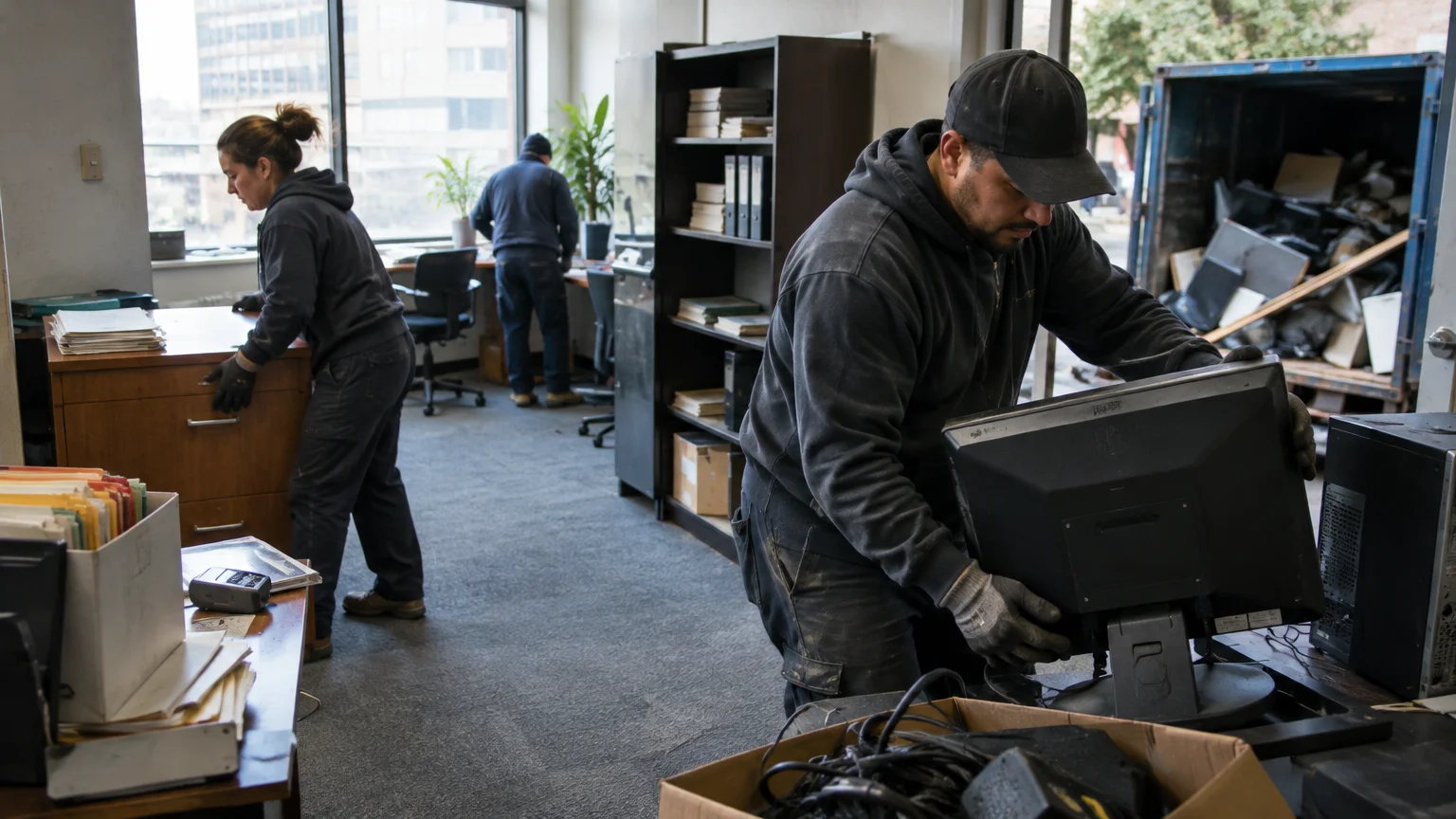
An office cleanout service is often better for a full workplace reset. The crew handles the heavy work and can remove many item types in one visit. This may reduce staff strain and help the business reopen or hand over the space sooner.
What professional crews typically remove
A commercial crew may remove desks, chairs, tables, cubicles, shelves, filing cabinets, and small appliances. It may also take boxes, carpet pieces, signs, display fixtures, and general office clutter. Before the crew arrives, the business should mark all items that must stay.
Some materials need separate handling. Computers, monitors, printers, and other electronics may need approved recycling or disposal routes. Keep confidential papers secure before the work starts. Tell the crew about paint, chemicals, batteries, or other restricted waste.
A cleanout service is a planned removal job that clears unwanted property contents. It does not always include deep cleaning or repairs. Ask what removal, sorting, sweeping, and disposal tasks the service covers.
How labor, sorting, loading, and hauling are handled
The crew usually starts with a walk-through and a removal plan. Workers can separate items for reuse, recycling, donation, or disposal when those options are available. They can also protect doors, walls, floors, and shared areas while moving bulky items.
This help matters when employees cannot safely lift heavy furniture. It also helps property managers who do not have staff at an empty site. Apex North Carolina Junk Removal serves commercial customers who need organized removal in and around Apex.
Your business still has an important role. Someone must approve the items, protect records, and explain building rules. Clear labels and a simple room plan can prevent delays.
When Is Renting a Dumpster the Better Choice for Business Junk?
A dumpster may be better when debris appears over several days and workers can load it safely. It can suit a renovation, fixture removal, or warehouse project with a steady flow of waste. The site must have enough room for delivery, access, and pickup.
Projects that generate debris gradually
Dumpsters work well when a business removes shelving, flooring, drywall, packaging, or other renovation debris in stages. Contractors can load the container as each area is finished. This keeps debris in one place instead of spreading it around the property.
A dumpster may also fit a planned move when the business has time to sort. Staff can add unwanted furniture and boxes as rooms are cleared. Workers should not overload the container or put restricted items inside it.
A dumpster may be less useful when the project has many large objects. Furniture can fill the container quickly. A cleanout crew may load those items more efficiently without requiring employees to do the heavy work.
Site access, loading responsibilities, and rental timelines
Before choosing a dumpster, check driveway width, overhead wires, gates, parking rules, and ground conditions. The container needs a stable placement area. Some properties also need approval from a landlord, city, or building manager.
The business is normally responsible for loading the container. Workers should use safe lifting methods and keep people away from unstable piles. A contractor may do this work, but the plan should be clear before delivery.
Rental timing also matters. A project that runs late may need a schedule change. A project that ends fast may not need a container sitting on site. At a busy storefront or office entrance, placement can affect customers, tenants, and daily work.
How Do Office Cleanout Services and Dumpster Rentals Compare in Cost?
The total cost of either option depends on the job and site. Key factors include material amount and type, labor, access, disposal needs, container size, project length, and urgency. The final cost should be confirmed on a quote after the company reviews the work.
What affects the total cost of each option
A cleanout may need more labor because workers sort, carry, load, and haul items. Stairs, long halls, elevators, limited parking, and tight loading areas can add time. Large furniture and heavy equipment may also change the work plan.
A dumpster may shift more work to your business. The comparison can change based on container size, rental period, delivery access, and disposal rules. Extra labor may still be needed if staff cannot load the material safely.
Restricted materials may need separate handling under local or state rules. Describe these items before scheduling. Also ask about possible added costs for prohibited materials, extra time, or changes in the project scope.
How labor, disposal, materials, and project scope change the comparison
A small office with easy access may be simple to load. A large office with many floors, many workstations, and a tight deadline needs more planning. One option may seem easier until you consider labor time, worker safety, and business disruption.
The best comparison looks at the whole project. Consider who will move the items, where the waste will go, how long the work will take, and how the site will stay safe. Apex North Carolina Junk Removal can explain the factors that affect a commercial removal quote for businesses.
Which Option Handles Office Furniture, Electronics, and Special Items?
Both options may handle common office junk, but a cleanout crew often gives more help with mixed loads. Furniture, electronics, records, and restricted materials may need different steps. Sort sensitive or regulated items before removal.
Desks, cubicles, chairs, and filing cabinets
Desks, chairs, cubicle panels, shelves, and filing cabinets can be hard to move through narrow doors. Crews may need to take some items apart before carrying them out. Building rules may also require elevator bookings or protection for shared halls.
A dumpster can hold some furniture, but large pieces use space fast. Staff should break down items only when it is safe and allowed. Sharp edges, heavy drawers, and unstable stacks can cause injuries.
Before work begins, separate items for reuse. Mark anything that must remain in the building. A simple room-by-room list helps prevent accidental removal.
Electronics, confidential materials, and restricted waste
Electronics include computers, monitors, printers, phones, servers, and cables. Some contain parts that should not go into normal trash. Ask how these items will be handled, and keep records that must be saved.
Protect confidential papers before the crew arrives. A removal service may not offer document shredding unless you arrange it first. Follow your record policy and use a qualified document destruction provider when needed.
Paint, solvents, fluorescent lamps, batteries, medical materials, and chemicals may have special rules. Never place these items in a dumpster without approval. If the project includes unusual waste, tell the service early.
How Should You Choose Between an Office Cleanout and a Dumpster?
The best choice comes down to labor, timing, access, material type, and business disruption. A cleanout fits a fast reset with mixed items and limited staff. A dumpster fits a staged project when workers can load debris safely and the site can hold the container.
Questions about timeline, labor, access, and business disruption
Owners and property managers should ask these questions before deciding:
- Who will sort, lift, carry, and load the unwanted items?
- Does the site have safe room for a container and delivery truck?
- Does the project need one visit or several days of loading?
- Will customers, tenants, employees, or neighbors be affected?
- Do any items need special recycling, shredding, or disposal?
- Must the space be ready by a lease, move, or renovation deadline?
The answers often make the choice clear. A company with no extra workers may benefit from a crew. A contractor with an active renovation may prefer a container near the work area.
A practical decision checklist for owners and property managers
Choose a cleanout service when the workplace has mixed items, heavy furniture, or clutter in several rooms. It is also a good fit when the business wants less disruption and needs the work done on a planned date.
Choose a dumpster when debris arrives in stages and trained workers can load it. Confirm the placement area, allowed materials, rental period, and building approval before delivery. Plan for weather, public access, and safe loading.
A property manager may use both options on a large project. A crew can clear furniture from an office, while a dumpster supports a later renovation. Apex North Carolina Junk Removal can help property owners compare these needs before work starts.
What Should You Expect During a Commercial Office Cleanout?
A commercial office cleanout should begin with planning and end with a usable space. The process often includes a walk-through, item review, access planning, removal, hauling, and a final check. Good planning helps protect workers, tenants, customers, and the building.
Planning the removal around employees, tenants, and customers
Choose a work window that limits daily disruption. You may need to reserve elevators, notify tenants, move vehicles, or protect customer areas. Name one person to answer questions and approve changes.
Before the crew arrives, employees should remove personal items and save important records. Label items that stay. Point out alarms, locked rooms, loading zones, and fragile finishes.
During removal, workers should keep walkways clear and use safe lifting methods. Doors, floors, and walls may need protection. The work plan should change if workers find unsafe materials or items outside the agreed scope.
Preparing the space for reuse, renovation, or turnover
After removal, the manager should walk through each room. This check can confirm that furniture, boxes, and debris are gone. It can also show whether cleaning, repairs, painting, or recycling tasks remain.
A cleared office may become a new workspace, storage area, retail floor, or rental suite. The next step depends on the property plan. Removal crews usually focus on hauling unwanted items, so arrange deep cleaning or construction work separately when needed.
Key takeaways
- An office cleanout includes hands-on removal, loading, and hauling.
- A dumpster suits projects that create debris over several days.
- Furniture, electronics, records, and restricted waste need separate planning.
- Access, labor, timing, and disposal needs shape the final quote.
- The safest choice fits the site and the staff available.
In closing, office cleanout vs dumpster rental is not the same choice for every business. A cleanout crew can simplify a fast workplace reset. A dumpster can support a staged project with safe loading space. Contact us to plan a commercial office cleanout that fits your property and schedule.
Frequently Asked Questions
What is a cleanout service?
A cleanout service removes unwanted items from a home, office, store, or other property. For a business, the work may include desks, chairs, cubicles, boxes, fixtures, and general clutter. Confirm whether sorting, loading, sweeping, recycling, and special disposal are included.
This type of service can also help with house cleanout FAQs, estate cleanouts, and other removal needs. The work plan changes based on the property size, item types, access, and local disposal rules.
Can a business put office furniture in a dumpster?
Some office furniture may fit in a dumpster, but large items can fill it quickly. The business must follow the rental company’s rules for weight, size, and materials. Electronics, chemicals, and confidential papers may need separate handling.
Break down furniture only when it is safe and allowed. Heavy parts and sharp edges can hurt workers. A cleanout crew may be a better fit when many bulky items must leave the building quickly.
Who takes old office electronics?
A commercial removal company, electronics recycler, or approved waste provider may take old office electronics. The best choice depends on the equipment and local rules. Before removal, protect data, remove access codes, and confirm how computers, servers, printers, and monitors will be handled.
Do not assume that electronics belong in regular trash. Ask about recycling or approved disposal before the job begins. This can help prevent delays and keep restricted materials out of the wrong waste stream.
Is a dumpster better for an office move?
A dumpster may work for an office move when staff or contractors can load unwanted items over several days. An office cleanout crew may be better when heavy furniture must leave quickly. The choice depends on labor, access, item volume, and the move deadline.
Think about the building as well as the junk. A container near an entrance may affect tenants, visitors, or deliveries. A planned cleanout can keep the work area clearer when the move must happen fast.
What should a business do with confidential papers?
Confidential papers should be separated from ordinary office junk. Follow the record retention policy and use secure document destruction when needed. Do not give sensitive documents to a cleanout crew unless the service and handling process have been confirmed first.
Keep important records in a safe place before removal begins. Tell the crew which boxes must stay. This simple step can prevent the loss of business records and private information.
Apex is home to many offices, shops, and growing businesses with changing space needs. Apex North Carolina Junk Removal can help business owners review their removal plan and understand which service fits the job.
If you are not sure what you are dealing with, it is worth having someone look at it before it turns into a bigger job. Get in touch with Apex North Carolina Junk Removal today and we will tell you where you stand.