Drywall removal FAQs can help property owners plan what gets removed, how to control dust, and how to avoid delays. Drywall and plaster cleanup may include loose pieces, damaged boards, and other renovation debris. The right plan depends on the material, site access, local disposal rules, and nearby work.
A remodel can leave behind more debris than expected. Broken boards, dusty scraps, and plaster can slow down the next step. A clear removal plan helps homeowners, contractors, and property managers keep work areas safer and ready to use.
Table of Contents
- What does drywall removal include?
- How much does drywall removal cost?
- How should drywall be disposed of?
- How can dust be controlled during drywall removal?
- How long does drywall removal and hauling take?
- Can drywall removal be handled as a DIY project?
- How should you prepare a site for drywall removal?
- Frequently Asked Questions
- Key takeaways
- Conclusion
What does drywall removal include?
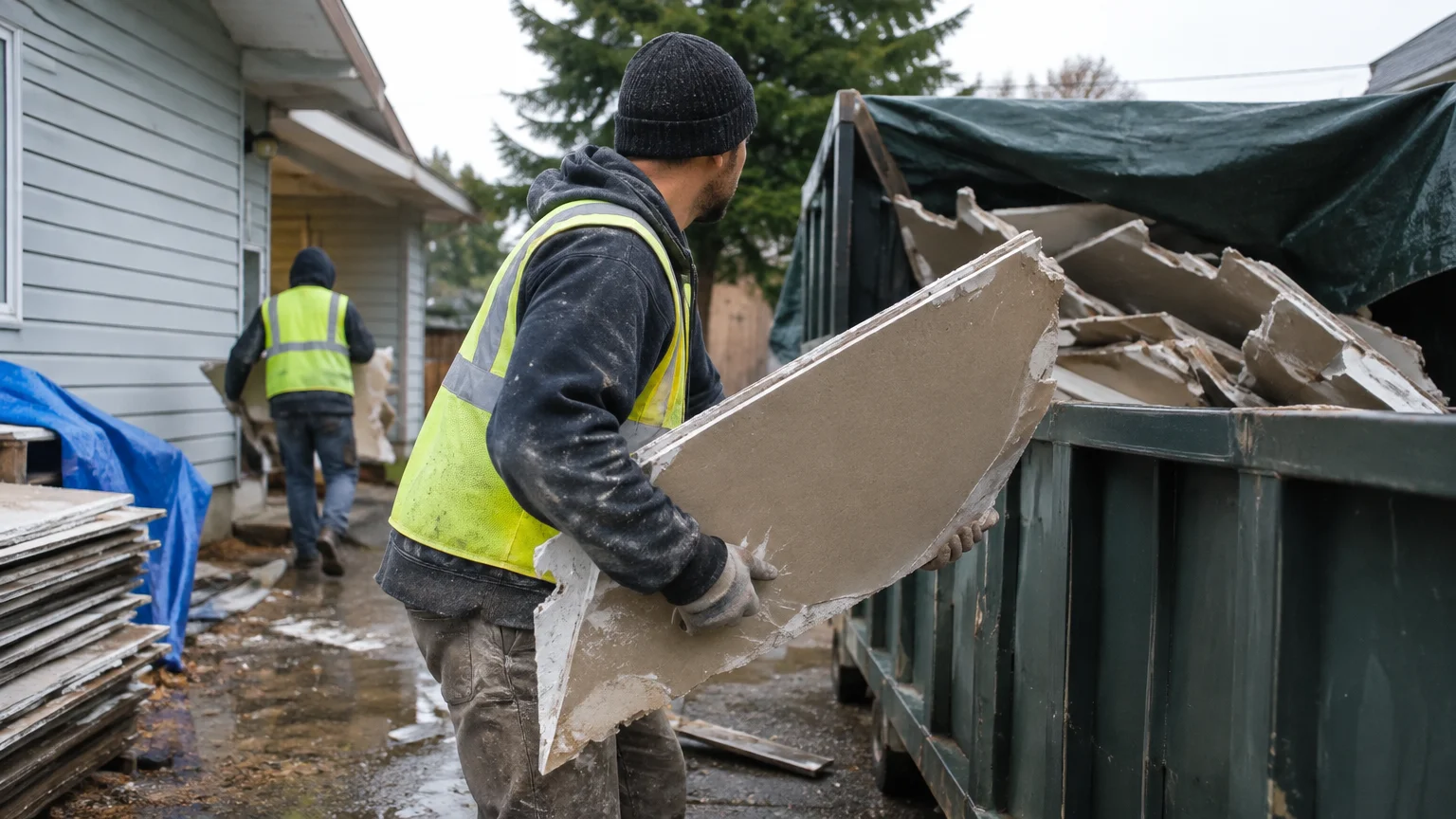
Drywall removal usually means taking away wallboard, plaster, and related tear-out waste. The job may also include gathering loose scraps and loading them for disposal. Before work starts, the property owner and removal team should agree on what stays and what goes.
Which materials and debris are typically removed?
A cleanup may include drywall sheets, broken board pieces, plaster, and small amounts of wood or trim from the same project. Some jobs also have insulation, metal corner bead, screws, or packing materials. These items may need different handling, so separate them when you can.
Drywall is a wall or ceiling panel with a gypsum center and paper sides. Plaster is a different wall material often found in older buildings. The two can look alike when broken, but they may differ in weight and disposal options. Tell the crew what materials are present instead of assuming everything is standard drywall.
Construction debris removal may also include other renovation waste, such as wood scraps or concrete chunks. Appliances, furniture, and household trash are separate items to discuss before pickup. A full-service junk removal company may take mixed loads, but accepted items depend on the provider and local rules.
What should be clarified before work begins?
Confirm which rooms, piles, or items are part of the removal. Point out things that must stay, such as fixtures, doors, or stored tools. Tell the team if the debris is indoors, outdoors, upstairs, or behind a locked gate. These details help the crew plan access and avoid mix-ups.
Apex North Carolina Junk Removal can help homeowners and contractors discuss drywall and renovation waste before cleanup. Say whether the material is bagged, loose, or still attached to a wall. If the remodel also has furniture or appliances, name those items separately so the plan covers the full job.
How much does drywall removal cost?
Drywall removal cost depends on how much material needs hauling, where it is, and how easy it is to reach. Mixed debris, hard access, heavy plaster, and urgent timing can affect the quote. The final cost is confirmed on a quote after the job details are reviewed.
What factors affect the overall cost?
The size of the debris pile is one part of the estimate. A small stack of loose board is different from a large tear-out spread across several rooms. Carry distance, stairs, narrow halls, parking, and whether the debris is already gathered can also change the work involved.
Material type matters too. Drywall is often easier to move than dense concrete, while plaster can be heavy and break into many small pieces. Mixed renovation debris may take more sorting than a load of one material. Tell the removal team what is in the pile before the quote is confirmed.
Timing and site conditions can also shape the plan. A pickup during active work may need to fit around other trades or building rules. Tell the provider about deadlines, work hours, and loading limits. This helps set clear expectations based on the job.
How does drywall hauling compare with other renovation debris?
Drywall hauling is often simpler than removing dense concrete or large, awkward items. Still, a large pile of broken board can take up a lot of room. Concrete chunks weigh more, while wood scraps may be easier to stack. The mix of materials and ease of access matter more than the material name alone.
A fridge or other appliance needs a different plan from drywall. Check local rules and ask whether the hauler accepts it. Do the same for old or broken furniture. Tell the provider what needs to go so the quote reflects the real load.
Do not compare providers based only on a short description of the job. Give each one the same details about materials, pile size, access, and timing. That makes each quote easier to understand and can prevent changes caused by missing information.
How should drywall be disposed of?
Drywall should go to a disposal or recycling site that accepts its material and condition. Local rules and facility policies can affect where it belongs. Keep drywall apart from other debris when practical, and check the destination before arranging a drop-off or haul.
Can drywall be recycled or reused?
Some clean drywall may be accepted for recycling or reuse, depending on local facilities and its condition. Wet, painted, moldy, or mixed pieces may not qualify. Do not assume recycling is available; ask the receiving site or a local removal provider first.
Reuse works best when sheets are whole, dry, and in good shape. Broken pieces from a tear-out are less likely to suit another building project. Keep usable sheets away from rubble and scraps so they do not get damaged. A contractor may know if a clean piece can be used again on site.
Local disposal rules can differ across Apex and nearby areas, including Historic Downtown Apex, Scotts Mill, Cary, Holly Springs, Fuquay-Varina, and Morrisville. Transfer stations, recycling sites, and landfills may accept different materials and set their own sorting rules. Ask about the material before loading a vehicle, especially if the load includes plaster, insulation, or other renovation waste.
Why do disposal rules depend on the material and location?
Facilities decide what they can take based on their permits, equipment, and handling process. Drywall mixed with other waste may be treated differently from a clean, separate load. Local rules may also depend on the kind and condition of the debris.
Older buildings may have materials that need special care. If you are unsure what a wall contains, pause before breaking or moving it. Do not treat unknown material as regular drywall. Ask a qualified professional to check it before work continues.
For renovation cleanup Apex North Carolina Junk Removal can explain what details to share when planning a haul. The property owner should still check any rules that apply to the site and waste. Good sorting and clear details help keep debris on the right disposal path.
How can dust be controlled during drywall removal?
Dust can be limited by closing off the work area, covering nearby surfaces, and containing debris as it comes down. Plan dust control before demolition starts. The right steps depend on the room, the removal method, and whether people use nearby spaces.
What preparation helps limit dust indoors?
Move furniture, rugs, and personal items out of the room when possible. Cover items that must stay, and protect floors and doorways. Close doors to other rooms and keep vents from pulling dust through the home. Follow product and building guidance when covering vents or using equipment.
Keep children and pets away from the work area. Set a clear path for carrying debris, and avoid tracking dust through clean rooms. Bagging loose scraps or putting them in a suitable container as work continues can limit scattered pieces. Dry sweeping can send fine dust back into the air, so use a cleanup method suited to the material.
Dust can travel beyond the room being repaired. Tell nearby occupants when work is planned, especially in shared homes or business spaces. Property managers should also check building rules for work hours, hallway protection, and moving waste.
When might professional containment be appropriate?
Containment may help when work is near occupied rooms, shared halls, or sensitive equipment. It may also help with a large tear-out that creates a lot of loose debris. A qualified contractor can check the work area and choose suitable controls for the removal.
A hauling crew usually focuses on collecting and removing debris, not every part of demolition or indoor dust control. Confirm who will remove the wall material, who will control dust, and who will clean the room. Clear roles help prevent gaps between the renovation crew and hauling service.
If the building has unknown or damaged materials, stop and seek qualified help before disturbing them. Do not rely on a basic dust mask or household cleanup instead of an expert check. Safety matters more than speed or convenience.
How long does drywall removal and hauling take?
The time needed depends on the amount of debris, how it is set out, and how easily workers can reach it. A small, ready pile is usually easier to collect than debris spread across several rooms. Demolition time and hauling time are separate parts of the project.
What affects the project timeline?
The amount and condition of the material affect how it is handled. Bagged scraps may be easier to carry than loose pieces spread across a floor. Stairs, elevators, long walks, narrow doors, and limited parking can slow loading. Tell the team about these conditions when arranging the work.
Other trades may also affect the schedule. Electricians, plumbers, painters, and installers may need the same rooms. Building rules, loading times, and site safety steps can affect when debris can leave. Share known deadlines and work hours early.
Weather can matter when debris is stored outside or a loading path is open to the elements. Keep material protected and reachable, while following the property’s safety plan. The removal provider can confirm a practical arrival window after reviewing the job details.
How can removal be coordinated with renovation work?
Plan cleanup after demolition waste is ready to leave, but before new work needs a clear area. Ask the contractor which materials are being removed and whether any pieces must stay for a check or reuse. This keeps hauling in step with the remodel.
For work done in stages, decide if debris should be collected in one visit or separate loads. One cleanup may suit a finished tear-out, while ongoing work can make new piles later. The best choice depends on access, storage space, and the project pace.
Keep the loading route clear and tell crews who can approve changes on site. If the pile grows or includes new materials, update the removal provider before pickup. Clear talk helps contractors and property owners avoid delays caused by surprises.
Can drywall removal be handled as a DIY project?
A homeowner may handle small, simple cleanup tasks when the material is known, the area is safe, and local rules allow it. You do not need a professional for every loose scrap or basic tidy-up. Large tear-outs, heavy loads, hard access, and unknown materials need more care.
What safety concerns should property owners consider?
Wear work gloves and eye protection when handling sharp, broken board. Keep children and pets away, and do not lift a load that feels too heavy. Use a clear path and stable containers. Do not break material near wires, pipes, or fixtures unless a qualified person has checked the area.
Do not disturb material if you are unsure what it is. Older walls may have layers or products that are not safe to handle without an expert check. Stop work if the material looks unusual, has a strong smell, or causes concern. Ask a qualified professional what to do next.
DIY hauling also means checking vehicle space, securing the load, and confirming local disposal rules. Do not overload a vehicle or leave debris loose during transport. A disposal site may refuse material that is mixed or prepared the wrong way, so check its rules first.
When is professional debris removal a better fit?
Professional removal can help when debris is bulky, spread across a property, or hard to carry safely. It may also help contractors who need a clear work area without taking workers away from other jobs. Discuss what the crew will collect and what remains the owner’s task.
A removal team may take mixed renovation waste, but the provider should confirm accepted materials. Ask about a fridge, refrigerator, or broken furniture separately from the drywall plan. These items may need different handling and may not be accepted with construction debris. Professional furniture removal is a separate service to discuss when a remodel includes large items.
People searching for local junk removal often need help with one specific pile. Compare providers by clearly describing the material, access, and timing. Choose a service that explains what it can take and how collection will work. Business owners may also find that retail removal faqs and office cleanout faqs cover other kinds of workplace waste, but drywall still needs its own disposal plan.
How should you prepare a site for drywall removal?
Prepare the site by clearing access, protecting items that stay, and sharing clear details about the debris. A tidy path helps the removal team work with fewer pauses. Good preparation also helps the owner and contractor agree on what the cleanup includes.
What should be cleared or protected beforehand?
Move tools, furniture, vehicles, and stored items away from the debris and loading path. Protect floors and nearby surfaces if demolition or carrying is still underway. Mark items that must stay, and keep pets and other people away from active work areas.
Make sure gates, doors, and shared entrances can be used at the planned time. In a business building, tell the property manager or site lead about the collection. Check rules for elevators, loading zones, and work hours before the crew arrives.
Do not block exits, fire equipment, or access needed by other trades. If the pile is outside, keep it in a safe, reachable spot and protect it from weather when practical. These steps help with cleanup without asking the owner to lift anything unsafe.
What details help plan a smooth cleanup?
Share the kind of material, rough pile size, location, and access limits. Explain whether drywall is loose, bagged, or mixed with plaster, wood, insulation, or other waste. Photos may help a provider understand the job, but confirm the details directly too.
Mention stairs, long carry distances, parking limits, and building rules. Tell the provider whether a contractor will be there and who can answer questions. If the job includes trash or household items, list them apart from renovation waste.
Frequently Asked Questions
Can drywall be put in regular household trash?
That depends on local rules and the waste service. Some areas limit construction waste in household bins, and large pieces may not fit or be accepted. Check with the local waste provider before disposal. Keep drywall separate until you know which option accepts it.
Can wet drywall be recycled?
Wet drywall may not be accepted for recycling because its condition can affect how it is handled. Keep it separate from clean, dry pieces and ask the receiving site what it takes. If the material is moldy or has an unknown coating, get qualified advice before moving or sorting it.
How can someone get rid of old furniture during a remodel?
First, check whether the furniture can be donated or used again. For damaged items, ask a local waste provider or removal service what it accepts. Describe large or broken pieces separately from drywall, since they may need a different loading and disposal plan.
How should someone dispose of concrete chunks?
Concrete is heavy, so keep pieces in a safe, steady place and avoid lifting more than feels comfortable. Check local disposal options or ask a removal provider if it accepts concrete. Keep it apart from drywall and light debris so the load can be planned correctly.
What should someone ask before booking drywall hauling?
Ask which materials the provider accepts, what details it needs, and how access or mixed debris affects the plan. Explain the amount, location, and timing clearly. Confirm the final cost on a quote before work begins, and make sure everyone agrees on what will be removed.
Key takeaways
- Confirm which materials are included before removal begins.
- Keep drywall separate when disposal or recycling rules are unclear.
- Plan dust control before demolition starts.
- Share access, timing, and material details when requesting a quote.
- Handle small, safe cleanup tasks yourself, but get help for heavy or unknown materials.
Conclusion
A clear plan makes drywall cleanup easier to fit into a renovation. The material, access, dust control, and local disposal options all matter. Apex North Carolina Junk Removal can help explain what details are useful when planning debris collection and nearby communities.
Contact us to discuss your drywall debris and plan the next step.